

The short answer: HubSpot's Prospecting Agent charges 100 credits, about $1, for every contact it recommends as a lead. In a single day our setup recommended 22 contacts and used 2,200 of our 3,000 monthly credits. The leads were accurate, so we would recommend the agent for a small set of high-value accounts. We would not recommend it as a first option, because sequences with Breeze, Claude or ChatGPT do most of the same job for far less.
We are a HubSpot partner. This is not a complaint about HubSpot. It is an honest account of what we did, what it cost, and what we would tell a customer who asked us before they started.
What is the HubSpot Prospecting Agent?
The Prospecting Agent is a HubSpot AI agent that finds companies and contacts matching your target customer, researches them, and drafts personalised outreach for a person to approve. You give it context. It recommends leads, a person approves the emails, and HubSpot sends them.
It works through three pieces of context, and this is where most of the value sits.
What are ICPs, personas and plays, and why set them up first?
Ideal customer profile (ICP). A description of the kind of company worth contacting. For us that meant credit unions, shipping and logistics firms, automotive dealerships, technical and industrial services, and training institutions across the Caribbean. A useful ICP says what the company looks like, which problems to test for, and what evidence you need before claiming a problem exists. It stops the agent, or a person, from guessing.
Buyer persona. The roles inside those companies: the executive sponsor, the sales leader, the person who will own the CRM and its implementation. Personas tell you who to speak to and what each of them cares about. A job title helps you find someone. It never proves budget, authority or pain, and our personas say so.
Play. In the Prospecting Agent, a play is one ICP put to work. It ties together the company list (a segment), the personas to target, a daily limit on suggestions, the signals to research and the instructions for the email. We built eight plays.
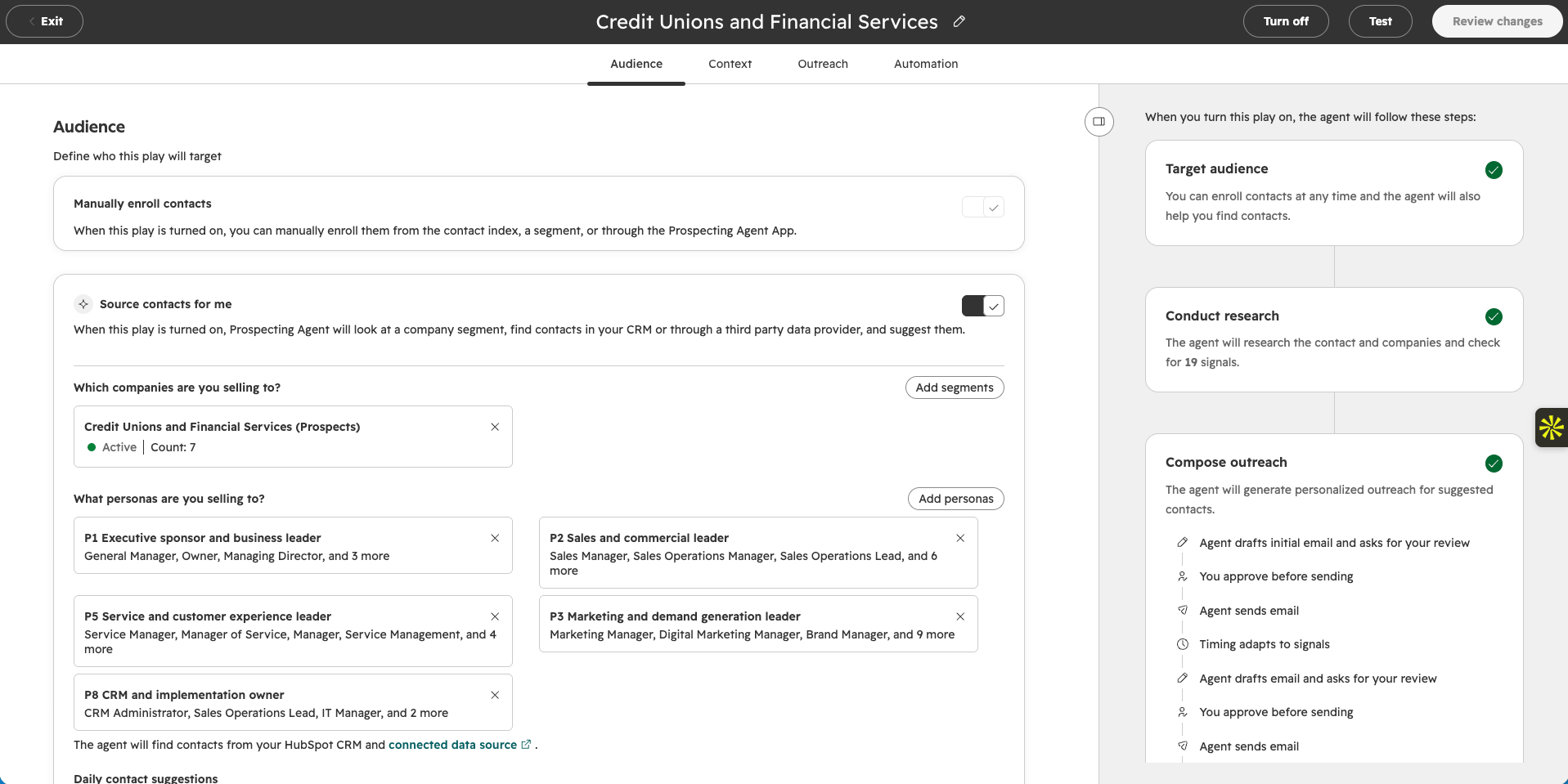
A play's Audience tab: the company segment, the personas to reach and the daily contact limit.
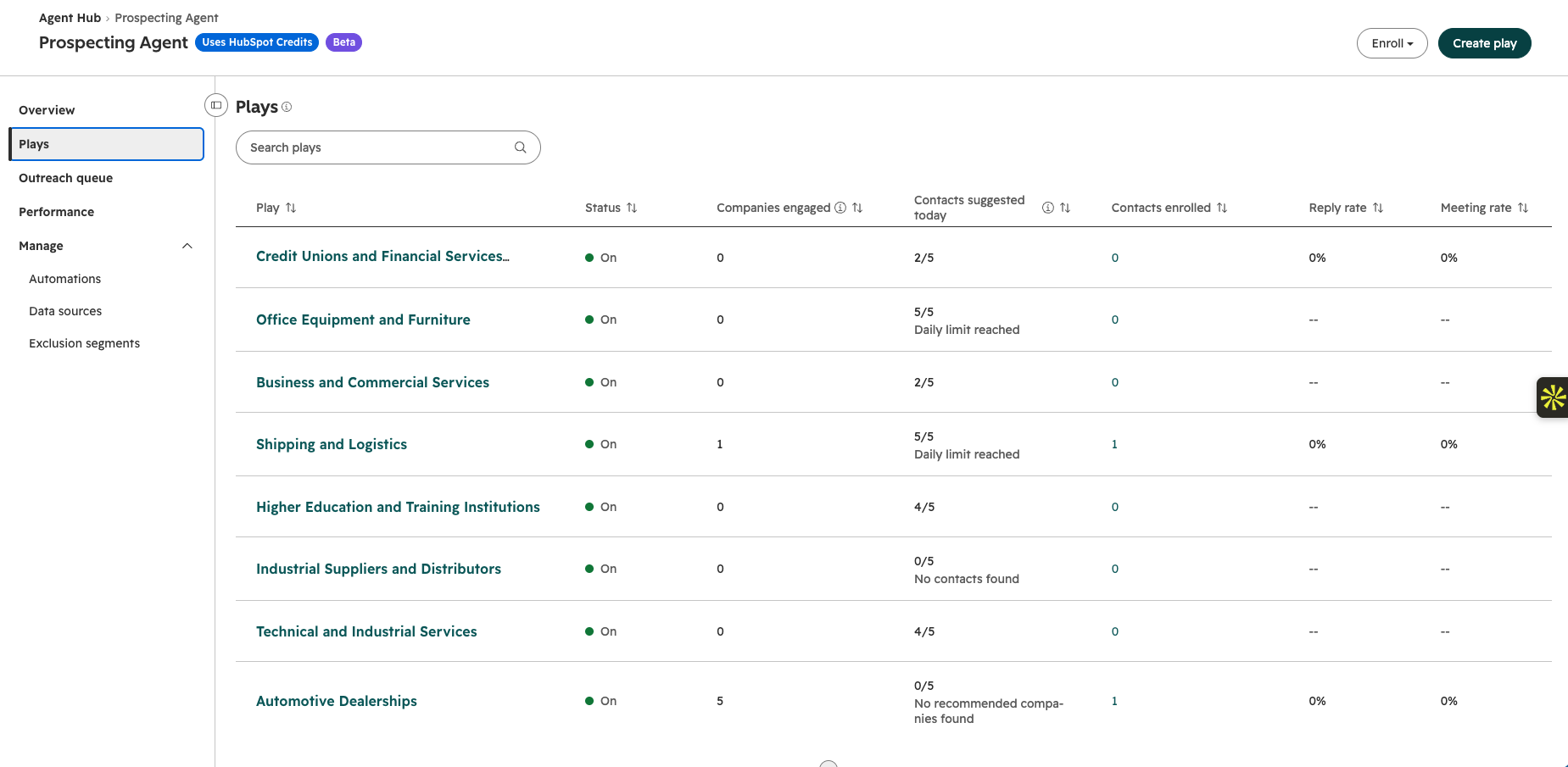
The Plays list, one play per ICP. The daily limits shown here are from before we lowered every play to one suggestion a day.
Why this matters. The agent is only as good as the context you give it. We wrote our ICPs and personas in a Google Doc first, argued with them, tightened them, and only then brought them into HubSpot. The agent then matched the right people at the right companies, and that was the most valuable part of the whole exercise. None of it depended on the agent. A document like that can sit outside HubSpot and still be read by Breeze, ChatGPT or Claude once they are connected, so every tool you use writes with the same understanding of your customer.
How much does the HubSpot Prospecting Agent cost?
HubSpot charges 100 credits per lead, and credits cost $10 per 1,000. One lead, which in the agent means one recommended contact, is $1. A plan like ours includes 3,000 credits a month, free, and they reset monthly.
| Credits | Cost (US) | Leads at 100 credits each |
|---|---|---|
| 1,000 | $10 | 10 |
| 3,000 | $30 | 30 |
| 10,000 | $100 | 100 |
That is the price list. Here is what it looked like in practice, taken from our own usage report on 28 October.
| Feature | What was charged | Credits used |
|---|---|---|
| Prospecting Agent | 22 recommended contacts (leads) at 100 credits each | 2,200 |
| Buyer intent | 30 companies added at 10 credits, and 9 custom intent signals at 50 credits | 750 |
| Total billed | 2,950 of 3,000 |
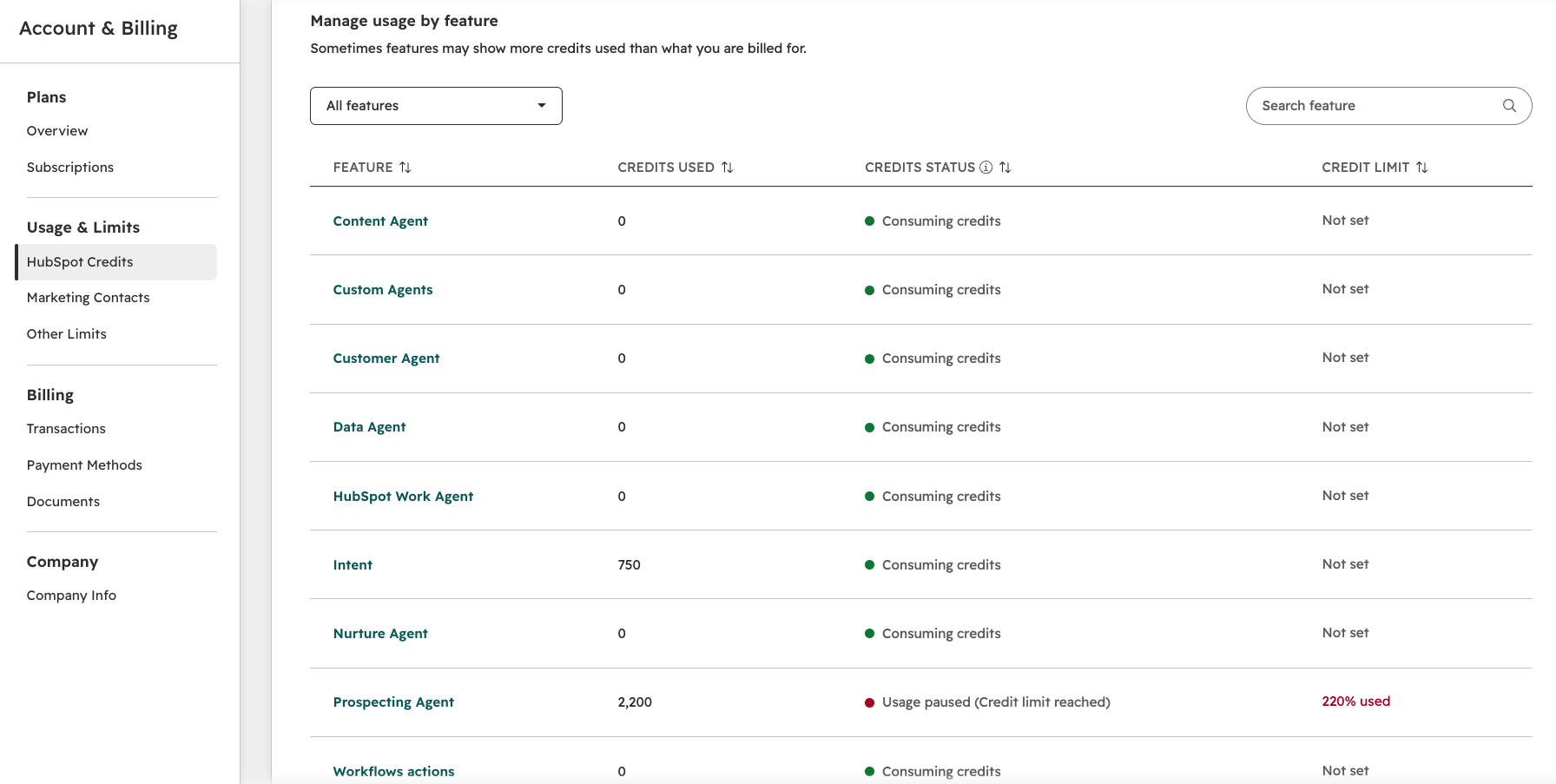
Usage by feature on 28 October: the Prospecting Agent at 2,200 credits, buyer intent at 750, and the agent paused at its limit.
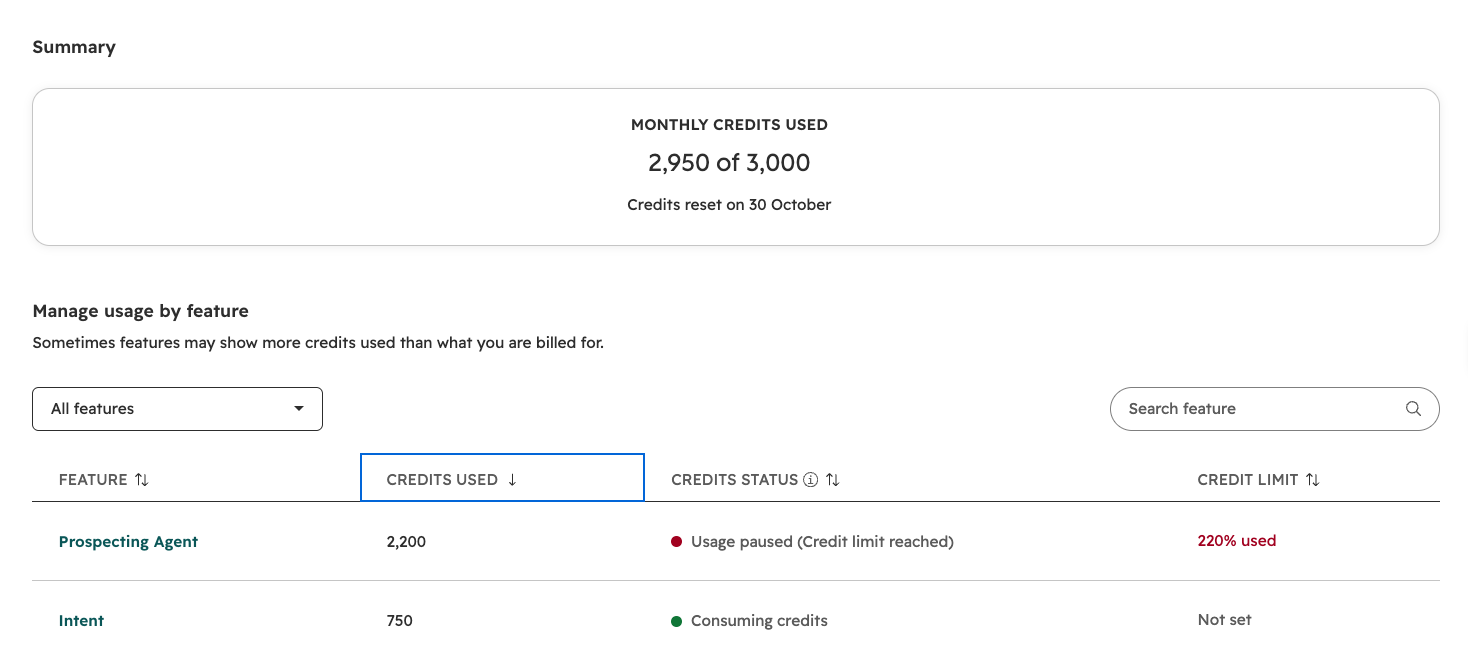
Usage by action: 22 Prospecting Agent actions at 100 credits each, and 2,950 credits billed in the month.
So the agent recommended 22 contacts, one per charge, and the charge landed when it recommended each one, not when an email went out. Buyer intent, which we also use, took another 750. Together they left us about 50 credits for the rest of the month. For one person doing a month of prospecting, 22 contacts might be enough. The problem is that it consumed nearly everything, and credits are shared across HubSpot's AI features.
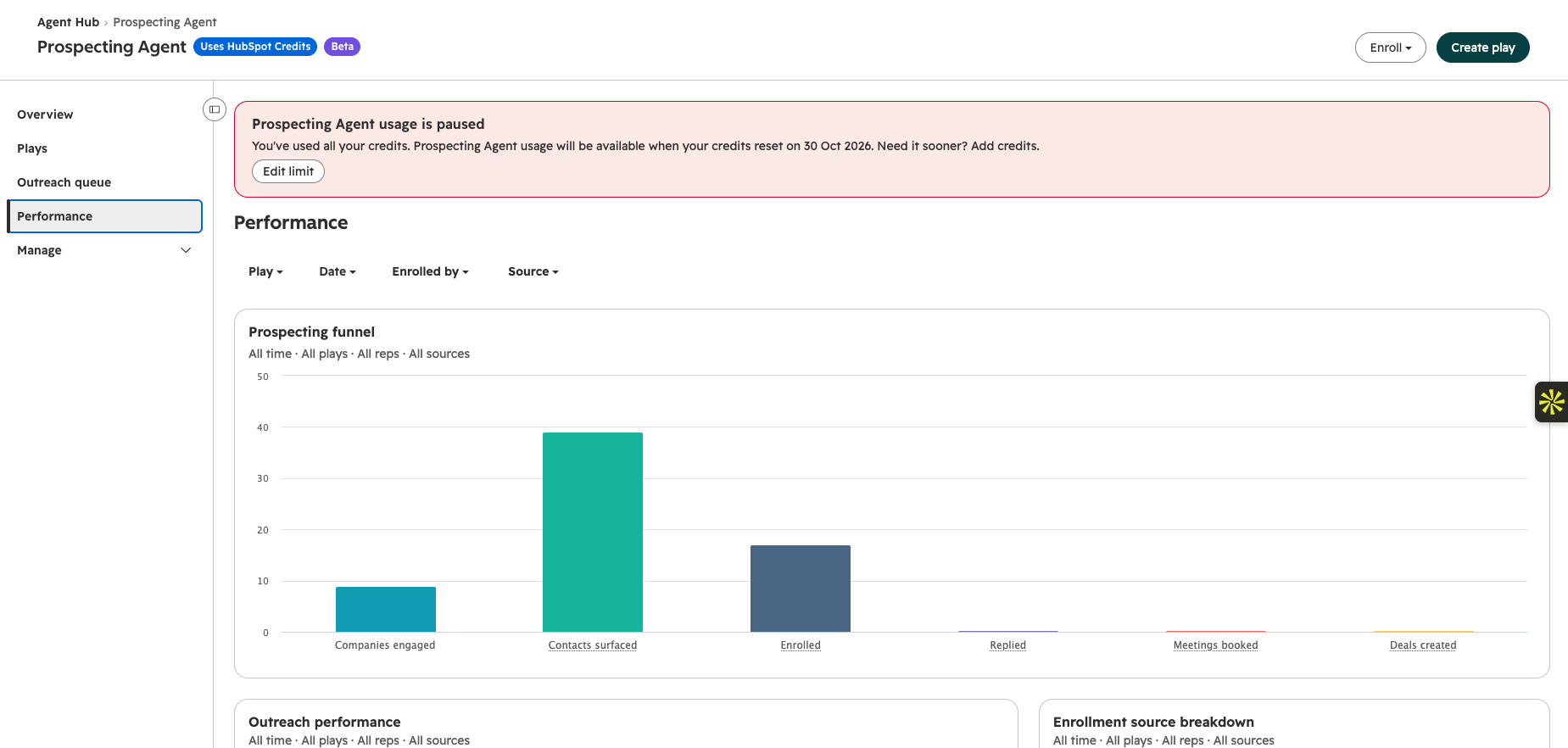
When credits run out, the Prospecting Agent pauses until they reset on 30 October.
What else uses HubSpot credits?
This is the part that surprises customers. HubSpot's credits page lists the Prospecting Agent, the Customer Agent, the Data Agent, buyer intent, Data Studio syncs, and Breeze actions that run inside workflows as credit-using features. They all draw from the same pool.
So a business that uses buyer intent, wants a prospecting agent and also runs an AI action in a workflow is competing with itself for the same 3,000 credits. A team with a marketing strategy and a sales strategy can tie up its credits very quickly and end up with a tool that feels underpowered.
A few points that are easy to miss:
- Our usage report shows the Workflows actions feature at zero credits. HubSpot's page names Breeze actions inside workflows as the credit-using part, and does not mention standard workflows you build by hand. We found nothing saying that ordinary workflows use credits.
- HubSpot's page does not list sequences or Breeze drafting as credit-using, and none appeared in our usage report.
- Apollo is billed separately. Apollo enrichment draws on your Apollo credits, and we used only 14 of our 335 lead credits this cycle. HubSpot does not say that Apollo sourcing also takes HubSpot credits, and our report showed no such charge.
Can you cap HubSpot credits?
Yes, and you should. In HubSpot's credits settings you can set a limit on how many credits an individual feature can use each month. Overage credits beyond your monthly allowance are billed at $0.01 each.
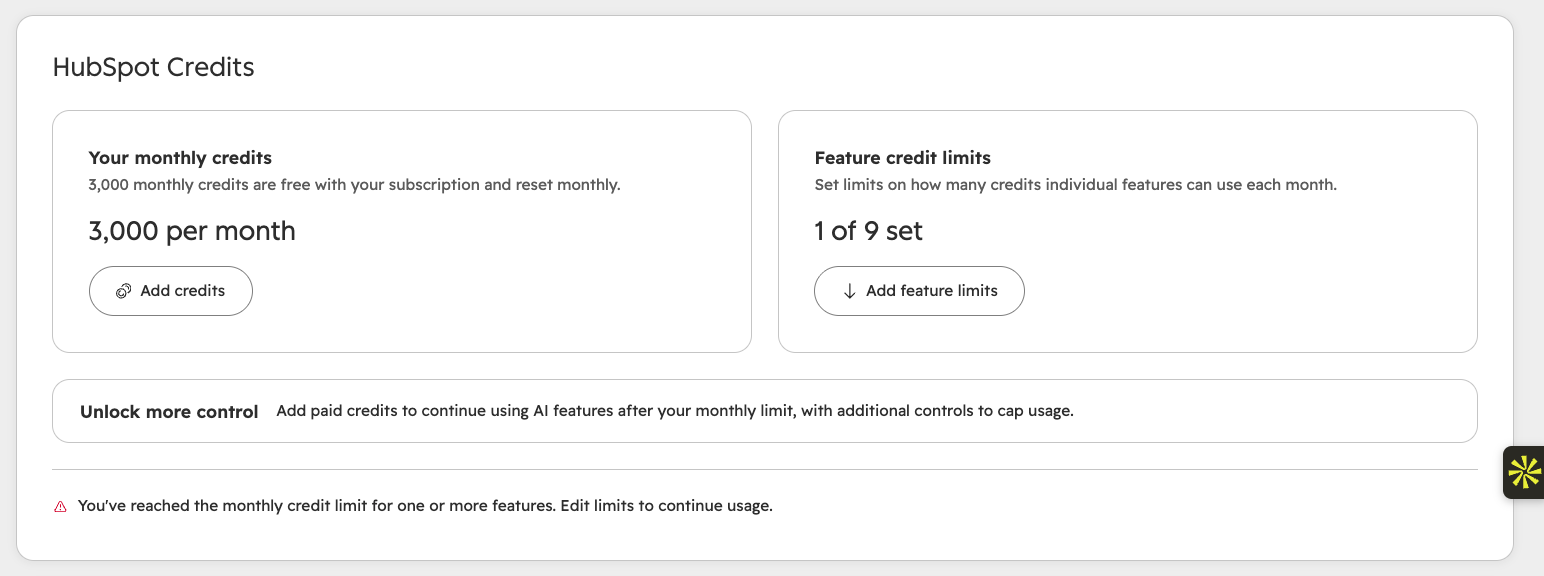
The HubSpot Credits settings: 3,000 monthly credits and feature limits, with one of nine set.
We set a 1,000-credit limit on the Prospecting Agent, which is about 10 leads, but we set it after the spend had already happened. That is why our usage page shows the agent at 220% of the limit, with usage paused. The lesson is to set the limit before you turn plays on, add up every play's daily suggestion limit, and decide what share of your credits you are willing to give each agent. We also reduced every play to one suggestion a day.
What does this cost in the Caribbean?
Credits are billed in US dollars on top of your subscription. For us, $10 US is about TT$68, and that is before you multiply it by the amount of prospecting you want to do. In Trinidad and Tobago, Guyana, Jamaica and across the English-speaking Caribbean, exchange rates turn a modest line item into a real monthly cost. A business that wants heavy outreach pays for the subscription, pays for credits, and often pays for a ChatGPT or Claude plan at around $20 as well.
What are the alternatives to the Prospecting Agent?
The agent automates what a person can already do. Once you have good ICPs and personas, there are cheaper ways to run the same play.
1. Manual sequences with Breeze. Build the list as a segment, write your templates once, and enrol contacts into a sequence. This is the manual version of the agent: you still build out a play, you just run it yourself. Breeze can help draft the templates, and it improves as it learns from your past emails, conversations and engagements.
2. Claude or ChatGPT for research and drafting. Connect Claude or ChatGPT to your HubSpot portal and give them your ICP and persona document. They can research a company and add what they find to the company record as a note, so the research sits in your CRM where your team can use it. You use a subscription you already pay for rather than HubSpot credits.
3. Apollo, ZoomInfo, Lusha and similar sources. We use Apollo. These tools connect to HubSpot, and to Claude and other assistants, so sourcing and enrichment do not have to run through the agent. This is where the agent is strongest: how it connects to these sources inside HubSpot. But an assistant connected to the same source can do much the same job.
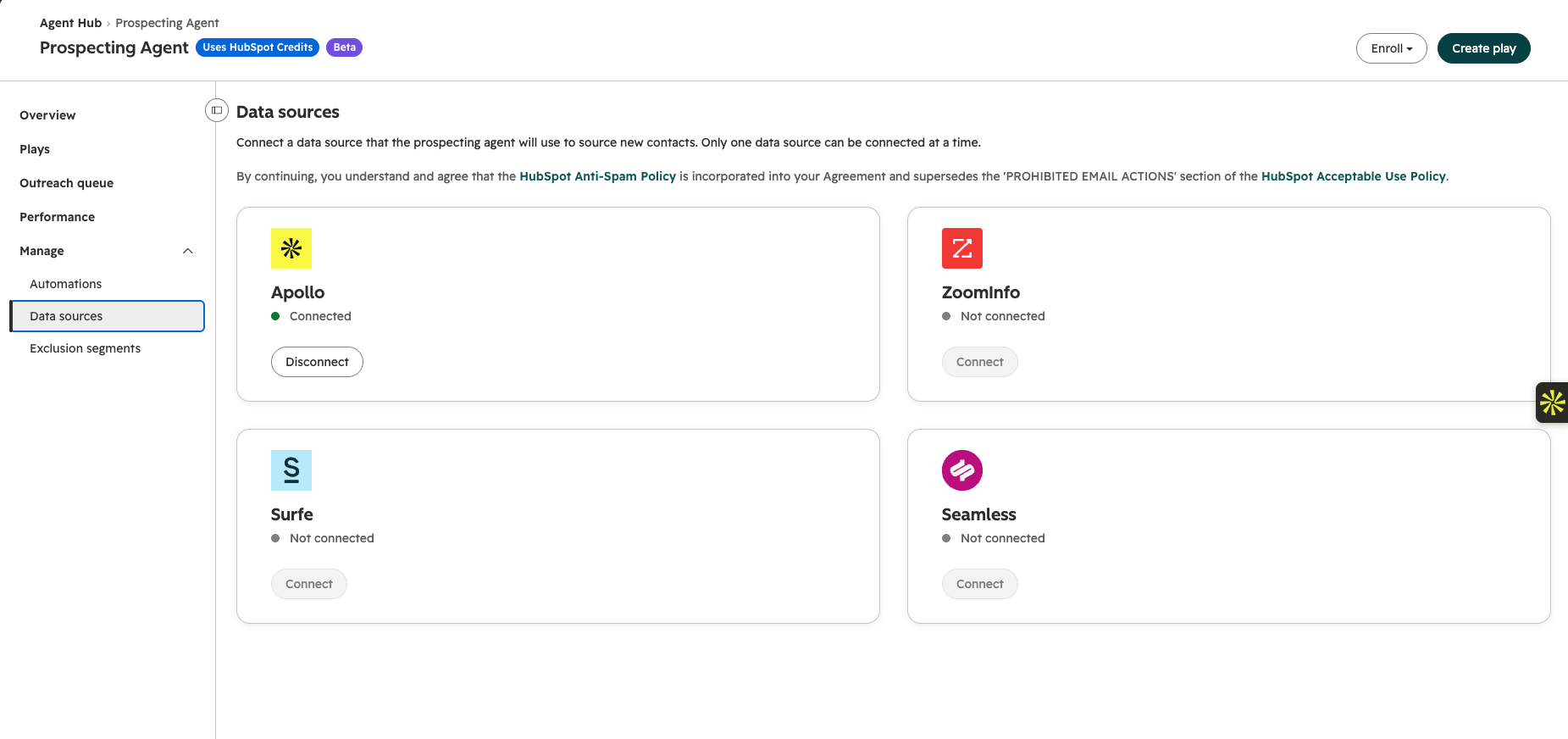
The agent's data sources: Apollo connected, with ZoomInfo, Surfe and Seamless available. Only one can be connected at a time.
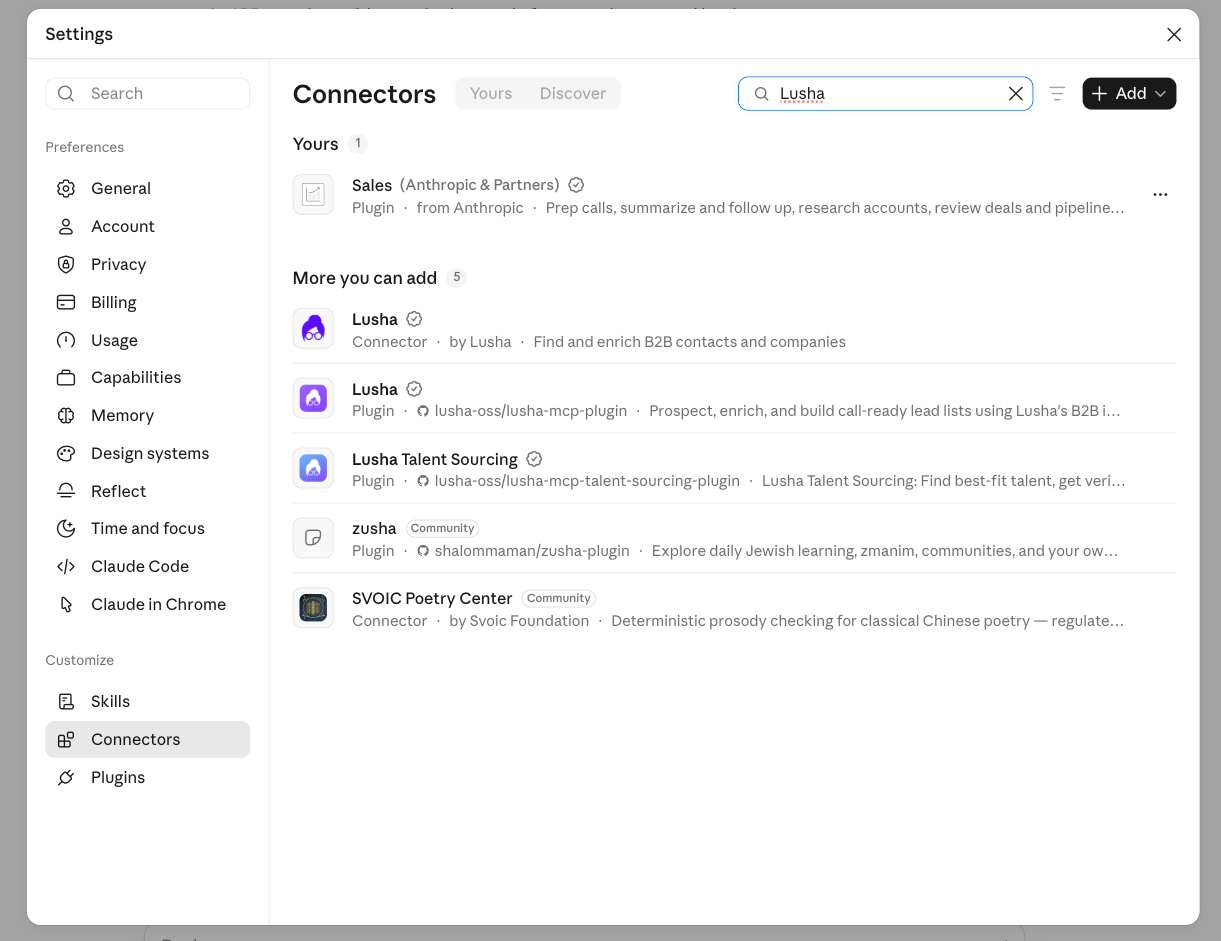
Lusha inside of Claude as an alternative to enrichment and filling the database with company/lead data
4. Documents and sheets as the working layer. Have the assistant save its research to a Google Doc or Sheet. A person reviews it, corrects it, and then puts the contacts into a sequence. It is slower than an agent and cheaper, and you stay in control of what is sent.
| Path | HubSpot credits | Who does the work | Best for |
|---|---|---|---|
| Prospecting Agent end to end | 100 per lead | Agent researches and writes, you approve | A short list of top-priority accounts |
| Research outside, enrol into the agent | 100 per lead | Claude or ChatGPT researches, agent writes | Saves sourcing, but sourcing was not the main cost |
| Research and drafts outside, send by sequence | None for the agent | Claude, ChatGPT or Breeze drafts, you enrol and approve | Volume, with a person reviewing each template |
Would we recommend the HubSpot Prospecting Agent?
Not as an initial first choice, but on a case by case, and only where it clearly benefits the customer.
The agent is good. It sourced the right people accurately, and that matters. But a customer who understands Breeze, ChatGPT and Claude may reasonably think they can do this themselves, and then find they are limited by credits. How much prospecting you plan to do decides the answer. A team that wants a handful of well-researched leads a month for high-value accounts may find $1 a lead reasonable. A team that wants volume will find 3,000 credits goes quickly, and sequences will give more for less.
Our own mix is to use Claude or ChatGPT for research and templates by default, send routine volume through sequences, and keep the agent for a small group of accounts with a low daily limit and a monthly lead budget.
What could HubSpot do better?
We would like to see more credit volume included with the subscription, or prospecting credits bundled more generously, so heavy outreach does not mean paying twice. 3,000 credits is not much when it works out to about 30 leads, and less once other agents take their share. In markets where costs are converted from US dollars, a bigger allowance would make a real difference to who can use the tool.
Frequently asked questions
How much does a lead cost with the HubSpot Prospecting Agent? 100 credits, which is $1 at HubSpot's rate of $10 per 1,000 credits.
When is the charge made? In our usage report the charge appeared when the agent recommended outreach for a contact, 100 credits for each of 22 actions, which matches the 22 contacts in our outreach queue marked ready to launch, not when an email was sent. We have not seen any further charge for the emails themselves, but we want to confirm this on a single test lead.
Do HubSpot workflows use credits? Our report shows zero credits for workflow actions. HubSpot's page names Breeze actions that run inside workflows as credit-using and does not mention standard workflows.
Does Apollo use HubSpot credits? Apollo enrichment uses Apollo credits. HubSpot does not say that Apollo sourcing also takes HubSpot credits, and our usage report showed none.
Can I set a credit limit? Yes. You can set monthly limits for individual features in your credits settings.
Can Claude or ChatGPT do the research instead? Yes, through connected sources such as Apollo, Lusha or ZoomInfo, and they can write the findings into HubSpot as notes. That uses your AI subscription rather than HubSpot credits.
What should a person still do? Approve every email, refine the wording, and give the agent examples of the structure you want: problem, impact, solution.
What we would tell you before you start
- Do the ICP and persona work first. It is what made the output accurate, and you can reuse it with any tool.
- Keep your context outside HubSpot as well. A shared document lets Breeze, ChatGPT and Claude all write with the same understanding of your customer.
- Set the credit limit before the switch. Add up every play's daily limit and put a monthly cap on each agent.
- Decide where the money goes. One dollar a lead suits a top-priority account. It is hard to justify for routine volume.
- Keep a person in the loop. Someone should approve every email.
Download: ICP and persona template
We are preparing a clean version of the ICP and persona document we used, with one worked example and no client names, so you can build yours before you spend a single credit. Get the download ICP persona template here
The wider point
CRM is not software. It is a strategy supported by people, process, technology and data, which is the thinking behind our framework and how we approach HubSpot as a technology choice. The Prospecting Agent is a good example: the technology was the easy part, and the value came from the people and process decisions made before it ran. The tool can be swapped. The thinking cannot.
If you are weighing the Prospecting Agent for your own team, talk to us before you set a daily limit.
Sources (opened 28 October 2026): HubSpot Credits, Understand HubSpot credits and billing, Set up and use the prospecting agent, Engagent's own HubSpot usage report.

COMMENTS